
2026 Infrastructure & Housing Outlook: FCT’s Massive Turnaround & What It Means for Buyers
With the 14-day grace period over, FCTA has begun enforcement on 1,095 revoked Abuja properties. From sealed gates to social media outrage, here’s how the public is reacting to the latest land reform wave in late 2025.
1/23/20263 min read
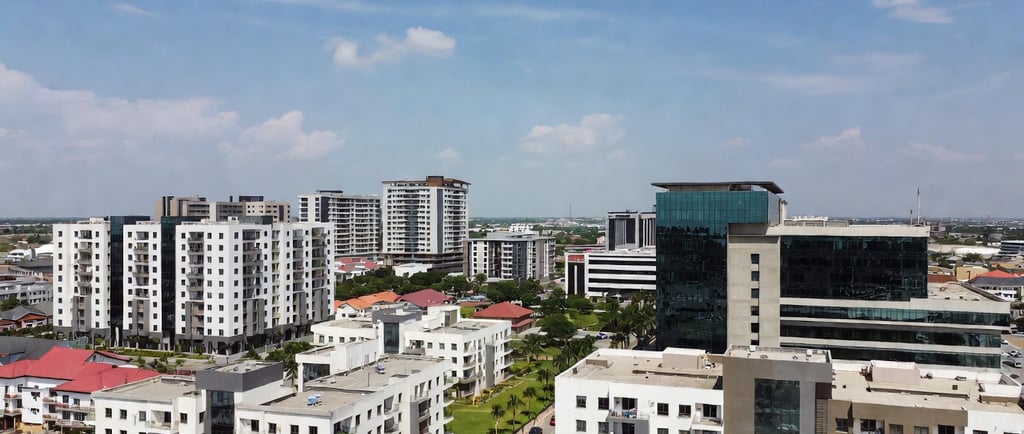
As Abuja marks its 50th anniversary in 2026, Federal Capital Territory (FCT) Minister Nyesom Wike has declared the year will deliver a “massive infrastructural turnaround” — one of the most ambitious development pushes since the capital’s creation. Two announcements in particular are already reshaping expectations for the housing and real estate market:
A major expansion of judiciary housing to include new residential blocks for FCT High Court judges and Supreme Court justices.
A revamped mass housing framework that enforces a strict 2-year development deadline on all new allocations to eliminate land speculation.
These moves signal a dual focus: rewarding critical public servants with better living conditions while freeing up land for genuine housing development. For buyers, investors, and developers, 2026 is shaping up to be a defining year.
Judiciary Housing Expansion: A Boost for High-End & Secure Living
In mid-December 2025, Minister Wike publicly confirmed plans to construct additional residential houses specifically for judges of the FCT High Court and justices of the Supreme Court. The initiative is part of a broader effort to improve welfare and security for judicial officers — many of whom currently live in older government quarters or private rentals.
Why this matters for the market:
New, purpose-built judicial estates will likely be located in secure, high-value zones (e.g., Maitama Extension, Asokoro, or Katampe).
These developments often set benchmarks for quality — modern architecture, 24/7 security, green spaces — which spill over into surrounding private estates.
Increased demand from judicial families, staff, and related professionals (lawyers, clerks) will push up rental yields and property values in adjacent areas by 15–25% within 12–18 months of completion.
This is not just symbolic — it creates a ripple effect: better judicial housing attracts legal professionals and support services, strengthening the ecosystem around government institutions.
Mass Housing Reforms: Ending Land Speculation with a 2-Year Deadline
Perhaps the most market-shifting announcement is the FCTA’s new operational framework for mass housing projects. Going forward, every new land allocation for housing development must see physical construction start within two years — or the title will be revoked under Section 28 of the Land Use Act.
Core elements of the reform:
2-year development rule — fencing and foundation must be visible within 24 months.
Digital monitoring — FCTA will use satellite imagery and site visits to enforce compliance.
Reclamation & reallocation — Undeveloped plots return to the pool for redistribution to active developers or mass-housing schemes.
Focus on affordability — Priority given to projects delivering 2–3 bedroom units for civil servants, young professionals, and middle-income families.
This directly addresses one of Abuja’s longest-standing problems: vast tracts of land held idle by speculators while thousands of citizens struggle to find affordable homes.
What This Means for Property Values & Housing Growth in 2026
Suburban surge — Areas like Lugbe, Gwagwalada, Kuje, Kubwa, and Nyanya will see accelerated development as developers race to meet the 2-year rule. Expect 20–35% price growth in these mid-range zones.
Premium districts stabilize — Maitama, Asokoro, and Guzape may see slower appreciation as new supply enters the market, but judicial housing will keep elite areas strong.
Rental yields rise — More 2–3 bedroom units will increase supply for tenants, but strong demand from civil servants and professionals will keep yields healthy (8–11% in suburbs).
Investor opportunity — Off-plan buys in mass-housing corridors offer the best value before completion drives up prices.
Risk reduction — Stricter enforcement means fewer “paper millionaires” holding idle land — more genuine development.
Looking Ahead: 2026 as Abuja’s Transformation Year
The combination of judiciary-focused housing and mass-housing reforms paints a clear picture: 2026 will be the year Abuja moves from planning to delivery. Infrastructure (roads, rail, power) will connect suburbs faster, while land policy forces developers to build rather than hoard.
For buyers:
Mid-income families → Target Lugbe, Kubwa, Kuje for value and accessibility.
Investors → Off-plan in mass-housing zones for 25–40% upside.
Luxury seekers → Judicial estates and Maitama extensions remain premium.
At House Unlimited Nigeria, we’re already curating listings aligned with these reforms — verified titles, active development, flexible plans.
Ready to position yourself for 2026’s growth?
→ Browse infrastructure-linked properties: houseunlimitednigeria.com/off-plan-properties
→ WhatsApp our team: +234 904 375 2708
→ Free consultation & market briefing: official@houseunlimitednigeria.com
Abuja’s next chapter is being written — make sure you’re in the story.
House Unlimited Nigeria – Investing in Tomorrow’s Abuja Today