
FCT Approves Major Infrastructure Projects: What This Means for Property Values & Housing Growth in Abuja 2026
The FCT Executive Council has greenlit key infrastructure memoranda to fast-track Abuja's development. From new roads to rail extensions, these projects could dramatically boost land values and reshape housing demand—here's what buyers and investors need to know.
1/16/20264 min read
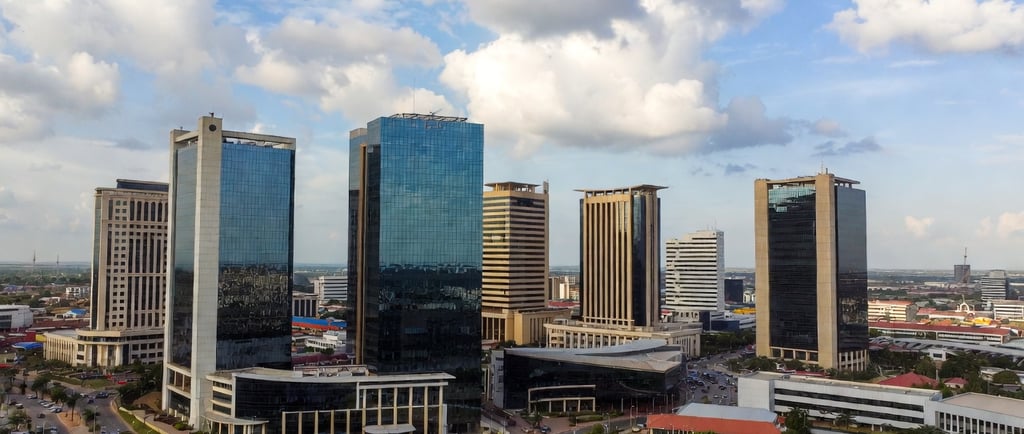

FCT Executive Council approvals on infrastructure and land-revenue enforcement can shift Abuja property prices by improving access/services in some corridors and raising compliance risk/costs for defaulting or non-conforming property owners. The immediate “property impact” is therefore two-sided: value uplift where infrastructure reduces friction, and value/transaction pressure where enforcement tightens.@van
What the FCT approved (and why it matters)
The FCT Executive Council (EXCO), chaired by FCT Minister Nyesom Wike, approved five key memoranda at its first meeting of 2026, framed as actions to sustain development, improve service delivery, and strengthen revenue generation in Abuja.@thewhistler
Officials specifically disclosed that EXCO ratified three major emergency infrastructure projects previously executed by the FCDA, meaning the projects were already delivered (or executed) and were being formally regularised/approved at council level.@van
For the property market, this kind of decision matters because it signals (1) where government is actively fixing liveability constraints like roads and water infrastructure, and (2) that land administration and revenue collection are being enforced more aggressively—both of which shape demand, supply, and transaction behavior.@thewhistler
The infrastructure memoranda (project-by-project)
Roads in the Presidential Villa
EXCO ratified the rehabilitation and resurfacing of roads within the Presidential Villa, which officials said had been in use for over 30 years and had become degraded/cracked, and that the works were executed by Julius Berger Plc.@van
While this is not a residential district project, it is still a governance signal: attention to road quality at the highest-security node often correlates with broader road-contract activity, contractor mobilisation, and a “delivery posture” that developers monitor when assessing policy seriousness.@thewhistler
Kabusa–Ketti Road (access + security effect)
EXCO ratified the emergency construction of the Kabusa–Ketti Road, described by officials as a response to poor road conditions and security issues (including robberies and kidnappings), and the road was reported as completed/commissioned in June 2025 with a final contract sum of N9.8 billion.@van
Road delivery in a previously “hard-to-reach” or “risk-tagged” corridor tends to change buyer psychology quickly—because commuting time, logistics cost, and perceived safety are baked into both rent and resale pricing.@thewhistler
Practical implication: landlords and developers around Kabusa–Ketti (and nearby link-up neighborhoods) may see stronger enquiry volumes, but only if complementary services (drainage, street lighting, policing presence) keep pace with the improved road access.@thewhistler
Erosion control + restoration of water pipelines (Lower Usuma supply)
EXCO ratified an emergency erosion control and restoration project for critical water pipelines supplying Abuja from the Lower Usuma Dam, with officials describing it as an intervention to prevent a potential collapse of the city’s water supply; the cost was reported at about N1.7 billion and executed by SCC Nigeria Limited.@van
Water reliability is a “silent” determinant of rental demand because it affects household running costs (tankers/boreholes), property maintenance, and tenant satisfaction—especially in multi-unit apartments where water stress can trigger vacancy or discounting.@thewhistler
Where water infrastructure stabilises, buyers often re-rate whole micro-markets: estates with consistent municipal water can command higher rents and sell faster than comparable stock reliant on expensive private alternatives.@thewhistler
The land and revenue enforcement memo (direct property pressure)
EXCO also approved enforcement actions against property owners who default on ground rent payments, Certificates of Occupancy (C-of-O) fees, and land use conversion charges, with officials stating enforcement would commence “from next week.”@van
Officials warned enforcement may include revocation of titles, sealing of properties, and other lawful measures, and named areas such as Wuse II, Garki Areas 7 and 8 (among others) in public notices referenced in the briefing.@van
This is a direct market lever: once sealing/revocation risk becomes credible, distressed sales increase, due diligence becomes stricter, and buyers demand cleaner documentation—often widening the price gap between “fully compliant” and “questionable” properties.@thewhistler
What this could do to land values and housing growth
Infrastructure approvals can increase effective land value because they reduce “distance cost” (time, fuel, vehicle wear) and improve service availability, which typically expands the set of households willing to live farther from core districts—supporting new housing supply in growth edges.@thewhistler
At the same time, stronger enforcement on ground rents, C-of-O obligations, and conversion charges can slow speculative trading of unregularised plots and push the market toward formal, financeable titles—important for developers seeking bankable projects and off-plan credibility.@van
Net effect: some corridors experience uplift from improved access/services, while some property owners face value compression if they must pay outstanding statutory fees quickly or risk penalties that disrupt occupancy and cashflow.@van
What property stakeholders should do now
Investors: Prioritise assets with clean documentation and verified compliance (ground rent, C-of-O status, approved use), because enforcement actions explicitly include sealing and potential title revocation.@van
Homebuyers/occupiers: Ask direct questions about water reliability and service delivery in the exact estate/location, since pipeline stability tied to Abuja supply was highlighted as a citywide risk item the government moved to protect.@thewhistler
Developers: Track areas gaining new or improved access (e.g., Kabusa–Ketti axis) and align product types (mid-income rentals, terraces, mixed-use where permitted) with what becomes feasible when security/access improves—while also budgeting properly for statutory conversion charges where land use changes are needed.@thewhistler
At House Unlimited Nigeria, our current listings in these infrastructure-adjacent areas come with verified titles, flexible 0% payment plans, and no revocation risk.
Want to position yourself before the 2026 boom?
→ Browse infrastructure-linked properties: houseunlimitednigeria.com/off-plan-properties
→ WhatsApp: +234 904 375 2708
→ Free consultation: official@houseunlimitednigeria.com
The FCTA is building the future of Abuja—make sure your property is part of it.
House Unlimited Nigeria – Investing Ahead of the Curve