
Shift Toward Rental-Focused & Short-Let Strategies in Abuja 2026
With median house prices in Abuja hitting ₦330–₦350 million, investors are moving away from quick flips toward cash-flow strategies. Corporate tenants and short-let conversions are driving higher, more stable yields — here’s why this shift is accelerating and what it means for landlords in 2026.
2/13/20263 min read
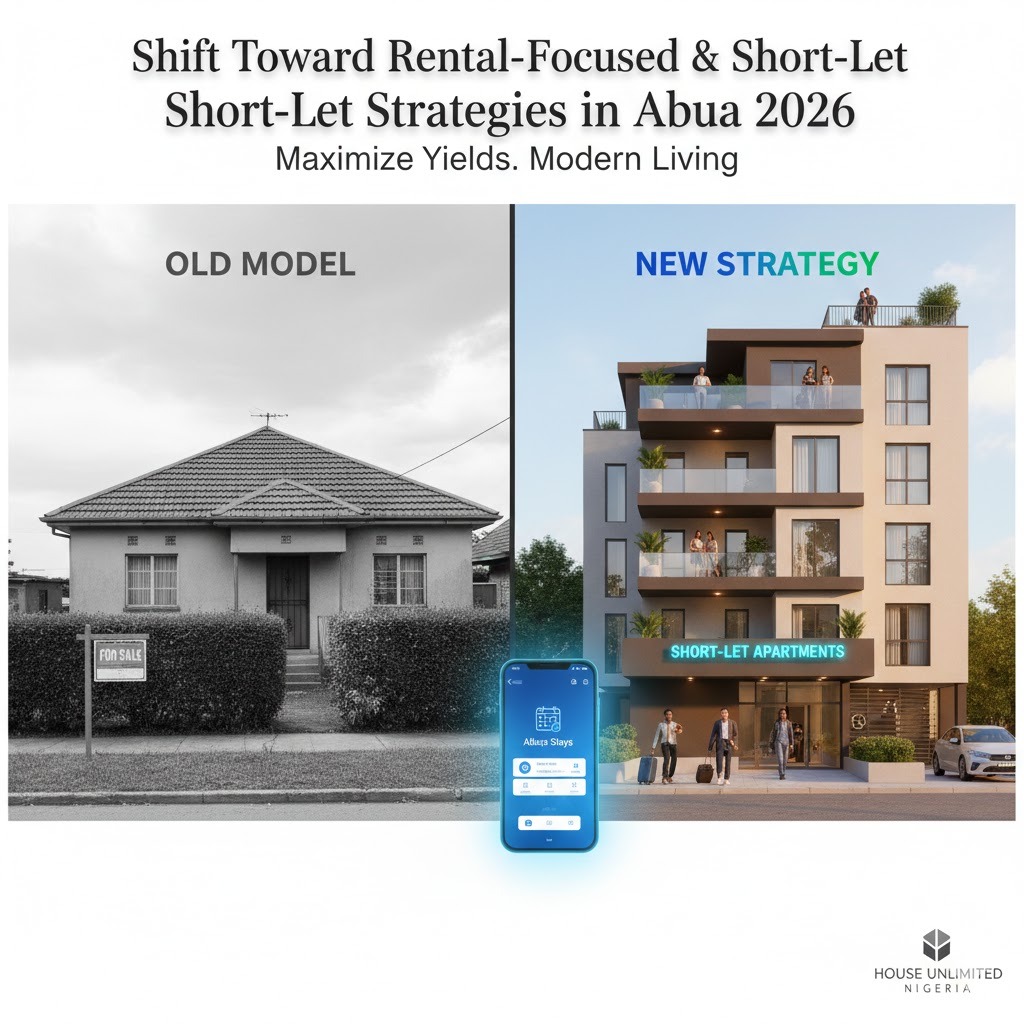
In Abuja’s 2026 real estate market, one pattern is unmistakable: ownership is becoming harder to achieve, but renting is becoming more profitable — especially for investors who adapt.
Median house prices have climbed into the ₦330–₦350 million range for decent family homes in well-serviced districts, while mortgage rates remain punishingly high and real incomes have not kept pace. For many middle- and upper-middle-class households, buying has moved out of reach — at least in the short to medium term.
The result? A structural shift toward long-term renting and a growing wave of investors converting traditional buy-to-let properties into short-let (Airbnb-style) units to capture higher daily/weekly yields.
At House Unlimited Nigeria, we’ve watched this transition accelerate in 2025–2026. Here’s what’s driving the change and where the clearest opportunities — and risks — lie for landlords in Wuse, Jabi, Gwarinpa, and beyond.
Why More Households Are Renting — Not Buying
Several interlocking pressures are keeping people in the rental market longer:
High entry barriers — Median house prices of ₦330–₦350 million require massive deposits and monthly repayments that exceed many households’ comfort zone, especially with mortgage rates still in the mid-20s.
Income–inflation mismatch — Real disposable income has not matched housing inflation, making large debt commitments feel riskier.
Job & lifestyle flexibility — Civil servants, NGO staff, contractors, and young professionals on fixed-term postings or career transitions prefer the flexibility of renting over long-term ownership.
Corporate relocations — Diplomatic missions, international agencies, and large corporates continue to bring in expat and senior staff who almost always rent rather than buy.
The net outcome: strong, sustained demand for well-located, secure 2–3 bedroom apartments and serviced flats — particularly near employment hubs.
Corporate Tenants: Stable, High-Value Income
One of the most reliable rental segments in Abuja is corporate and diplomatic tenants — diplomats, NGO workers, senior civil servants, and multinational staff who typically sign 1–3 year leases on furnished or semi-furnished apartments.
These tenants:
Pay above-market rents for quality, security, and convenience.
Require stable power, water, internet, and 24/7 estate security — features that command premiums.
Deliver very low vacancy risk — once a corporate lease is signed, turnover is minimal.
Prime micro-markets for this segment include Wuse II, Jabi, Mabushi, Utako, and parts of Gwarinpa Phase 1 & 2 — all within easy reach of ministries, embassies, and international offices.
Gross yields on well-serviced 2–3 bedroom units leased to corporate/diplomatic tenants often reach 7–10%, significantly above the Abuja average of 4–6%.
The Short-Let Boom: Converting Long-Term Rentals for Higher Yields
A growing number of landlords are moving beyond traditional long-term leases and converting properties (especially in Phase 1 and Phase 2 districts) into short-let units via platforms like Airbnb, Booking.com, and local aggregators.
Why short-lets are gaining traction:
Higher effective yields — Daily/weekly rates in premium locations can deliver 12–20% gross yields vs 4–8% from long-term rentals.
Tourism & business travel — Abuja’s diplomatic activity, conferences, and corporate visits create steady demand for short stays.
Flexibility — Owners can revert to long-term leases if short-let occupancy softens.
Hot short-let zones in 2026:
Wuse II & Central Area — high demand from business travelers and diplomats.
Jabi & Mabushi — lakefront appeal + proximity to offices and malls.
Gwarinpa Phase 1 — affordable entry + strong local demand for weekend stays.
Key considerations before converting:
Estate rules — many gated communities ban short-lets or require approval.
Regulatory risk — FCTA and local councils are increasingly monitoring short-let operations for tax and safety compliance.
Management overhead — short-lets require active cleaning, guest communication, and maintenance.
What This Means for Investors in 2026
Rental-focused strategies win — Properties with strong corporate/diplomatic appeal (secure estates, reliable utilities, good location) offer lower risk and more predictable cash flow.
Short-let conversions can supercharge returns — but only in the right micro-locations and with proper legal/management setup.
Long-term ownership still pays — but patience is required; capital gains are strongest in infrastructure-linked corridors (e.g., rail extensions, ONEX), while rental income dominates in established urban hubs.
Practical Steps for Abuja Landlords Today
Audit your portfolio — Which units are best suited for corporate long-term vs short-let?
Prioritize service quality — Reliable power, water, security, and professional estate management are now table stakes for premium rents.
Target the right tenant mix — Corporate/diplomatic leases provide stability; short-lets offer higher peaks but more volatility.
Stay compliant — Ensure ground rent, C of O, and estate rules are current — regulators are watching closely.
At House Unlimited Nigeria, we help investors identify and acquire properties optimized for both long-term corporate rentals and high-yield short-lets — always with verified titles and realistic yield projections.
Ready to adapt to Abuja’s rental-driven market?
→ Explore rental-optimized listings: houseunlimitednigeria.com/off-plan-properties
→ WhatsApp our investment team: +234 904 375 2708
→ Free rental-yield analysis: official@houseunlimitednigeria.com
The market is shifting — from ownership dreams to rental reality. The smartest investors are shifting with it.
House Unlimited Nigeria – Turning Rental Demand into Reliable Returns