
Shifts in Rental vs Ownership Demand in Abuja: What It Means for Wuse, Jabi and Gwarinpa Investors
Abuja’s 2026 housing market is pushing more households toward renting instead of buying — especially in Wuse, Jabi and Gwarinpa. Rising construction costs, high interest rates and income pressures are reshaping the buy-to-let landscape. Here’s what investors need to know.
2/10/20264 min read
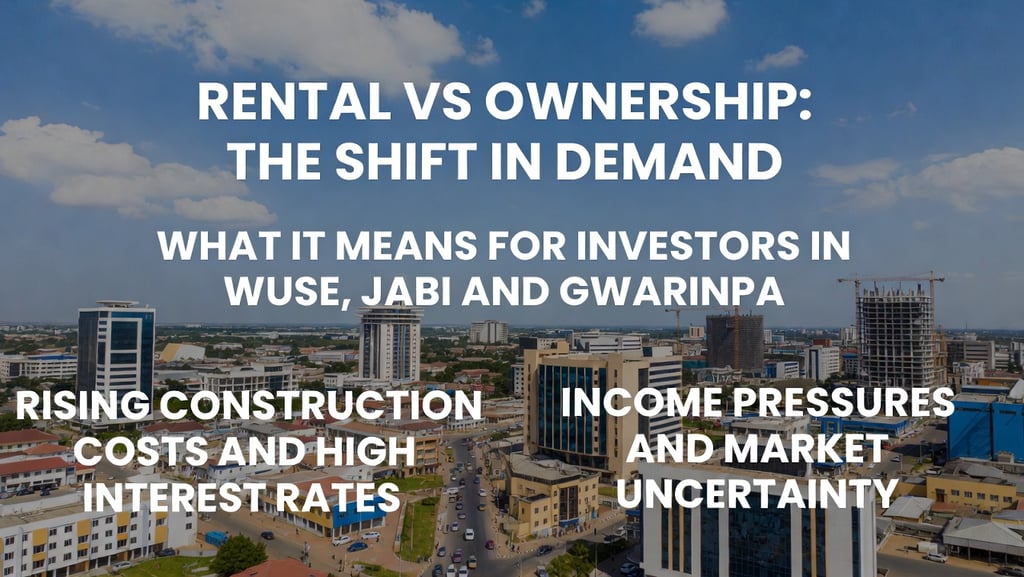
Abuja’s housing market in 2026 is putting real pressure on household budgets — and it’s quietly changing how people live and how investors win. Construction costs jumped roughly 50% in late 2025, pushing new-unit prices higher and lifting the floor under older stock. At the same time, real incomes haven’t kept pace with housing inflation, and mortgage rates in the mid-20s make debt servicing far more expensive than a year’s rent on a similar unit. The result? More families and professionals in Wuse, Jabi and Gwarinpa are choosing to rent for longer — sometimes indefinitely — rather than stretch to buy. This shift is creating both opportunities and new risks for buy-to-let investors in these core urban hubs. @nigeriahousingmarket
Why More People Are Renting, Not Buying
Several forces are steering households away from ownership: @zawya
Construction cost surge — Building costs rose ~50% in late 2025, driving up sale prices of new units and supporting higher asking prices on existing stock. @nigeriahousingmarket
Income vs inflation gap — Real incomes have lagged behind housing inflation, making deposits and monthly repayments unrealistic for many middle-class households. @zawya
Interest rate burden — Mortgage and lending rates in the mid-20s mean debt servicing on a purchase is often higher than annual rent on a comparable unit — especially in mid-tier districts. @zawya
Flexibility needs — Abuja’s workforce includes many civil servants, contractors and NGO staff on fixed-term postings who prefer flexibility over long-term ownership commitments. @propertypro
The net effect is clear: demand is tilting toward rentals, particularly for well-located, secure 2- and 3-bedroom apartments and mini-flats in central areas like Wuse, Jabi and Gwarinpa. @propertypro
What’s Happening to Rents in Wuse, Jabi and Gwarinpa?
The rental market in 2026 is described as “bullish” for landlords and challenging for tenants, with projected rent increases of 10–15% across many mid-tier districts. @nigeriahousingmarket
Wuse / Wuse II — Among Abuja’s most expensive rental micro-markets, with very high asking rents supported by strong demand from officials and professionals. @theafricanvestor
Jabi — A professional hub where serviced 2–3 bedroom apartments are expected to see ~12% rent growth in 2026, driven by corporate tenants and young families. @theafricanvestor
Gwarinpa— A mid-market estate zone where moderate purchase prices and steady demand from middle-income tenants keep occupancy high and vacancy risk low. @theafricanvestor
Across Abuja, analysts note that rental yields have risen roughly 5% over the past year as population growth and urban migration keep demand high. @theafricanvestor
Rental Yields: Where Do Wuse, Jabi and Gwarinpa Stand?
Gross rental yields in Abuja vary significantly by district: @theafricanvestor
Overall Abuja range: Typical gross yields run from ~2% to 7% depending on area and property type. @theafricanvestor
Gwarinpa: Around 4.4% gross yields, supported by balanced purchase prices and mid-market tenant demand. @theafricanvestor
Jabi and Wuse II: Often deliver only ~2–3% gross yields because purchase prices have run ahead of rent levels, compressing returns despite strong occupancy. @theafricanvestor
High-yield peers: Some of the highest yields in Abuja are in districts like Lugbe, which combine low entry prices with solid tenant pools, but mid-city neighbourhoods like Gwarinpa and Jabi still rank among the best-performing Abuja submarkets in national yield comparisons. @theafricanvestor
For investors, this means Wuse and Jabi are increasingly “capital preservation plus prestige” plays, while Gwarinpa sits closer to a balanced income-return profile. @theafricanvestor
What This Shift Means for Buy-to-Let Investors
The tilt toward renting — rather than owning — creates both opportunities and traps for landlords. @theafricanvestor
Upside for investors
Strong tenant demand — Tight occupancy in core areas like Wuse II, Jabi and Gwarinpa reduces vacancy risk, especially for 2–3 bedroom units in secure, serviced buildings. @propertypro
Rising rents — With rents forecast to rise 10–15% in many mid-tier zones, landlords can gradually reprice units at renewals, especially where service quality is high. @nigeriahousingmarket
Structural tailwinds — Nigeria’s housing deficit and ongoing urban migration to Abuja underpin medium-term growth in both rent levels and capital values. @nigeriahousingmarket
Key risks
Yield compression in lifestyle districts — In Wuse II and Jabi, prices have risen faster than long-term rents, pushing yields down 30–40% in recent years and leaving some investors struggling to meet expectations. @theafricanvestor
High acquisition costs — Buying at peak prices in these areas can lock investors into low yields for years, especially once you factor in service charges, maintenance and financing costs. @theafricanvestor
Policy and macro shocks — While structural demand is strong, macro or currency shocks could slow rent growth even as financing costs remain elevated. @nigeriahousingmarket
Practical Strategies for Today’s Abuja Landlord
If you’re investing in or already hold property in Wuse, Jabi or Gwarinpa, these tactics align with 2026 trends: @propertypro
Target the right unit sizes - Focus on 1–3 bedroom apartments and mini-flats, which show the steepest demand growth as tenants downsize from large duplexes to lower-running-cost units. @theafricanvestor
Prioritise cash-flow over prestige - In Wuse and Jabi, run the numbers carefully — if yields fall in the 2–3% range, consider whether similar capital can earn 4–5%+ in Gwarinpa or emerging hubs like Lugbe or Lokogoma with stronger rent-to-price ratios. @theafricanvestor
Invest in services, not just walls - Tenants under economic pressure still pay a premium for estates with reliable power, water, security and professional management. These factors are central to the strongest projected 5-year return profiles in Nigeria. @theafricanvestor
Lock in quality tenants - With rental inflation biting, long-term corporate or institutional leases in Jabi and Wuse can stabilise income even if headline market rents fluctuate. @nigeriahousingmarket
Think medium-term - Analysts project 5–15% annual price growth depending on area, with rental markets “under severe pressure” from structural shortages — favouring patient investors who buy in the right micro-locations and avoid over-leveraging. @nigeriahousingmarket
In summary, Abuja’s 2026 environment is pushing more households in Wuse, Jabi and Gwarinpa into renting, strengthening occupancy and rent levels but also exposing where yields no longer justify trophy pricing. For buy-to-let investors willing to run the numbers and prioritise fundamentals over status, the shift from ownership to renting can be a powerful tailwind rather than a risk. @theafricanvestor
Ready to find the right rental investment in Abuja?
→ Explore featured listings: houseunlimitednigeria.com/off-plan-properties
→ WhatsApp our team: +234 904 375 2708
→ Free investment consultation: official@houseunlimitednigeria.com
House Unlimited Nigeria – Turning Rental Demand into Real Returns